DECEMBER 28, 2018
बयान
Bayaan
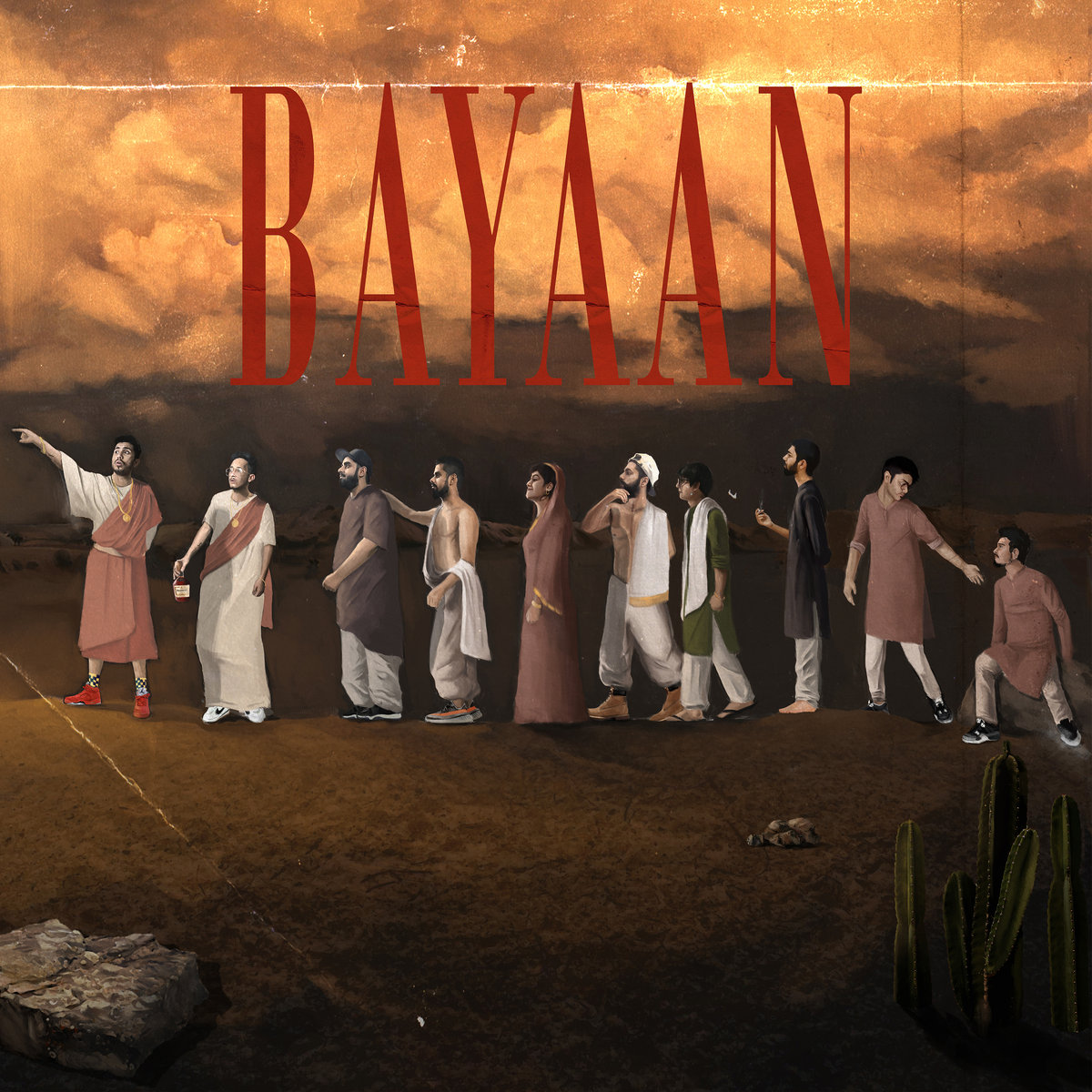
A statement. A confession. A revolution. The debut album that rewrote Indian hip-hop.
A statement. A confession. A revolution. The debut album that rewrote Indian hip-hop.
Before Bayaan, Calm rapped in English. Encore ABJ was the Hindi voice. But their manager heard Calm drop a few bars in Hindi during a freestyle and asked him to write a full verse for "Class-Sikh Maut Vol. II" — a collab with Prabh Deep. That one night of recording changed the trajectory of Indian hip-hop.
Over the next year, Calm and Encore locked in with Sez on the Beat to build what would become their debut album. They originally called it "Kranti" — Revolution. But as the album took shape, they realized it wasn't just anger. It was something deeper. A bayaan — a statement, a confession, a testimony.
The album opens with gossiping aunties — the sound of Indian society judging before listening. It closes with "Chalta Reh" — keep walking. Between those bookends: the fire of "Shaktimaan," the vulnerability of "Gehraiyaan," the tenderness of "Pankh," and the existential weight of "Kyu."
12 tracks. One year of work. A lifetime of truth.
Critics called it one of the greatest Indian hip-hop albums ever made. Fans didn't just listen — they lived it. Every line became a caption, every track became a ritual. "Shaktimaan" opened shows. "Chalta Reh" closed them.
But more than the acclaim, Bayaan did something structural: it proved that Hindi hip-hop could be intelligent, vulnerable, political, and banging — all at once. It didn't choose between head and heart. It demanded both.
The gossip aunty returns in Nayaab, four years later. She's still judging. But her daughter went to the show anyway.